iPod Anniversary: The 25-Year Legacy of the Pocket Music Revolution
Twenty-five years ago, Apple introduced a 5GB device that promised to fit a thousand songs into a space no larger than a playing card, fundamentally shifting how consumers carried their audio collections.
By Priya Sharma ·
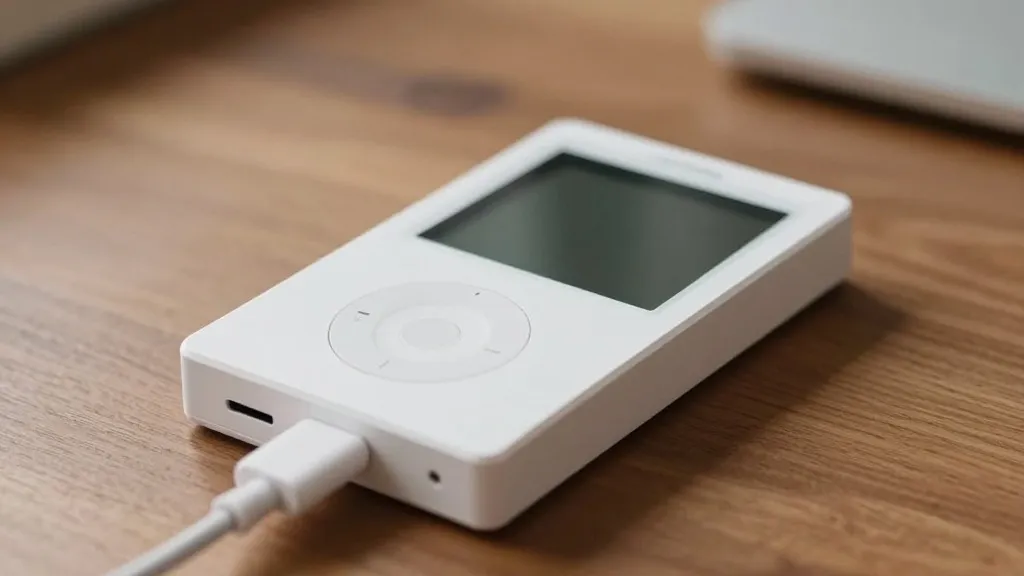
A quarter-century ago, a small white device changed the way the world listened to music.
On October 23, 2001, Apple CEO Steve Jobs took the stage to unveil the original iPod, a product he initially teased as a breakthrough digital device that was not a Mac. The launch marked a pivotal moment for the Cupertino-based company, which was well into its revival phase after the dot-com bubble burst. With iMacs and iBooks already established, Jobs had steered Apple beyond its earlier beige aesthetic into the Mac OS X era, positioning the Mac as the central hub for a user’s digital lifestyle. This strategy aimed to unify various digital devices, including cameras and camcorders, with the portable music player as a key component, targeting a massive market that lacked a dominant leader at the time.
The device was introduced as an MP3 music player capable of delivering CD-quality sound and supporting popular formats like MP3, WAV, and AIFF. Its defining feature was a 5GB storage capacity, which allowed it to hold approximately 1,000 songs, specifically typical pop-length MP3s encoded at 160Kbps. Jobs emphasized that for the average user, this capacity effectively meant having their entire music library in their pocket, a claim that distinguished it from the existing CD players, flash players, and hard disk-based jukeboxes on the market.
The physical design of the iPod relied heavily on a specific component from Toshiba, which provided an ultra-compact 1.8-inch hard drive just 0.2 inches thick. This technology enabled the device to be as small as a deck of cards, measuring 2.4 by 4 by 0.78 inches, and weighing only 6.5 ounces. Jobs noted that it was lighter than most cell phones available at the time, making it an ultra-portable option for daily use. Despite its small footprint, the player included advanced features such as 20-minute skip protection and fast file transfer capabilities.
A major technical differentiator was the device's use of a single FireWire 400 cable for both charging and data transfer. Apple marketed this as the first and only music player with such a connection, claiming it could transfer an entire CD’s worth of data in just five to 10 seconds. In contrast, USB connections of that era were estimated to take around five minutes for the same task, or up to five hours to fill the entire 1,000-song capacity, whereas the iPod could be fully populated in roughly 10 minutes. The unit also featured a rechargeable lithium-polymer battery that offered 10 hours of continuous playback and could be recharged to 80% in one hour.
The user experience was highlighted by what Jobs described as an amazing Apple design, featuring minimal and durable sides and back. The interface included a single-hand-friendly control scheme with an accelerated scroll wheel that used a piezoelectric clicker for tactile feedback. This allowed for rapid navigation through music by playlist, artist, or song. During the unveiling demonstration, the first song played was 'Building a Mystery' by Sarah MacLachlan.
The third key pillar of the iPod's strategy was its Auto-Sync feature with iTunes. iTunes 2 launched simultaneously with the iPod, introducing capabilities like MP3 CD burning and syncing support. This integration ensured that any library curated on a Mac would automatically remain synchronized with the pocket player whenever it was connected for charging or data transfer. The device even functioned as a FireWire hard drive when connected to a computer.
While the iPod dominated the portable music landscape for over a decade, its prominence began to wane with the launch of the first iPhone in early 2007. The two devices coexisted in Apple's product lineup for years, but the iPod's star faded as smartphones matured and rendered dedicated music players redundant. The final model, the 7th-generation iPod Touch, was released in May 2019. Although the product line was left unmaintained for a period, it was officially discontinued in May 2022, closing the chapter on a device that had defined personal music consumption for a generation.
Source: Tom's Hardware